Reading Success: How We Foster Early Literacy in Our Classrooms
“Reading is important, because if you can read, you can learn anything about everything and everything about anything.” – Tomie dePaola
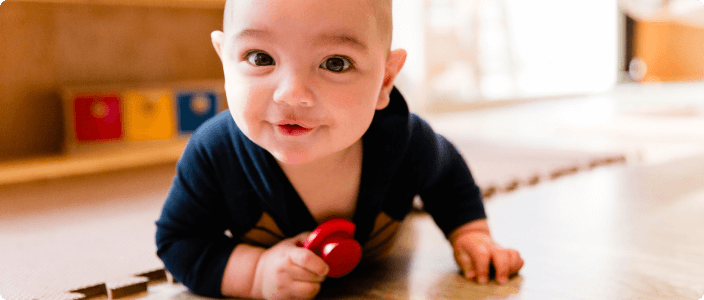
At our preschool, we believe early literacy is the foundation for lifelong learning. From the start, we nurture children’s ability to communicate, build vocabulary, and express their ideas. This happens every day as language and stories come to life in our classrooms. Here, infants and toddlers explore sounds and words. Two-year-olds begin to connect words with meaning. Preschoolers grow into confident speakers, storytellers, and early readers and writers.
These skills are fostered through our Links to Learning curriculum, using research-based techniques proven effective. Instead of teaching letters one at a time, we introduce sounds and words in meaningful ways that build over time. When you walk into our classrooms, you’ll see children scribbling, singing fun songs, and “reading” to their friends. These moments may look like play, but they are important steps on the path to reading success. Let’s take a closer look at how we build early literacy skills each day:
Book-Based Curriculum

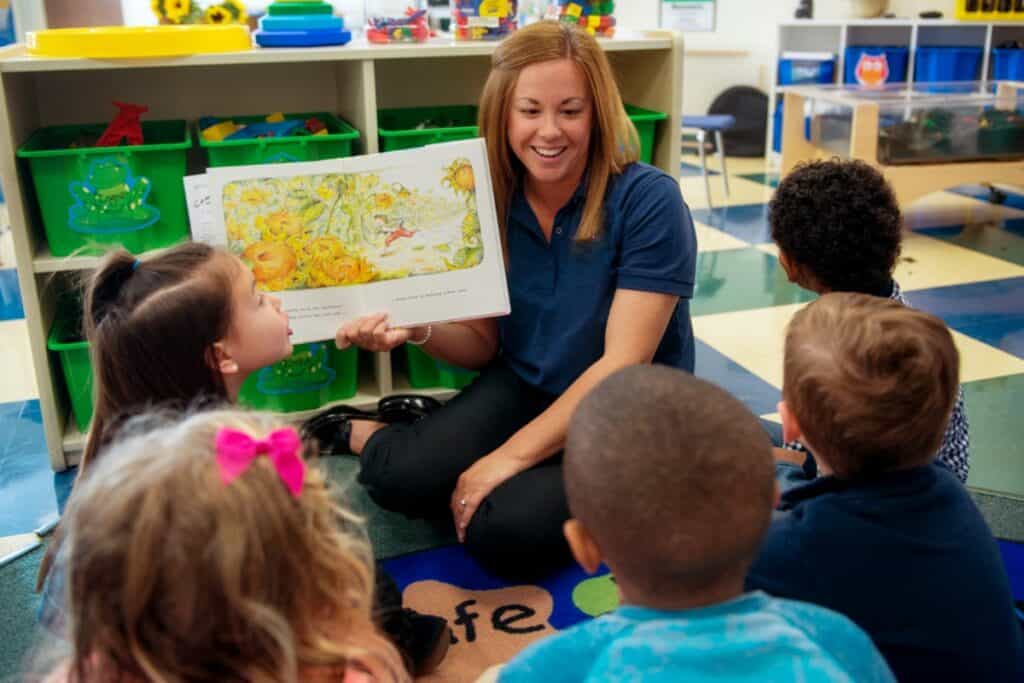
Each week, central books guide learning and set the theme for classroom activities. For example, after reading The Mitten by Jan Brett, students might build animal habitats in the science center, write animal names in salt “snow” at the writing center, use animal puppets or costumes in dramatic play, and count how many animals fit into a mitten in the math center. When learning is built around a shared story, books come to life and children begin to see reading as exciting and meaningful.
Classroom Environment
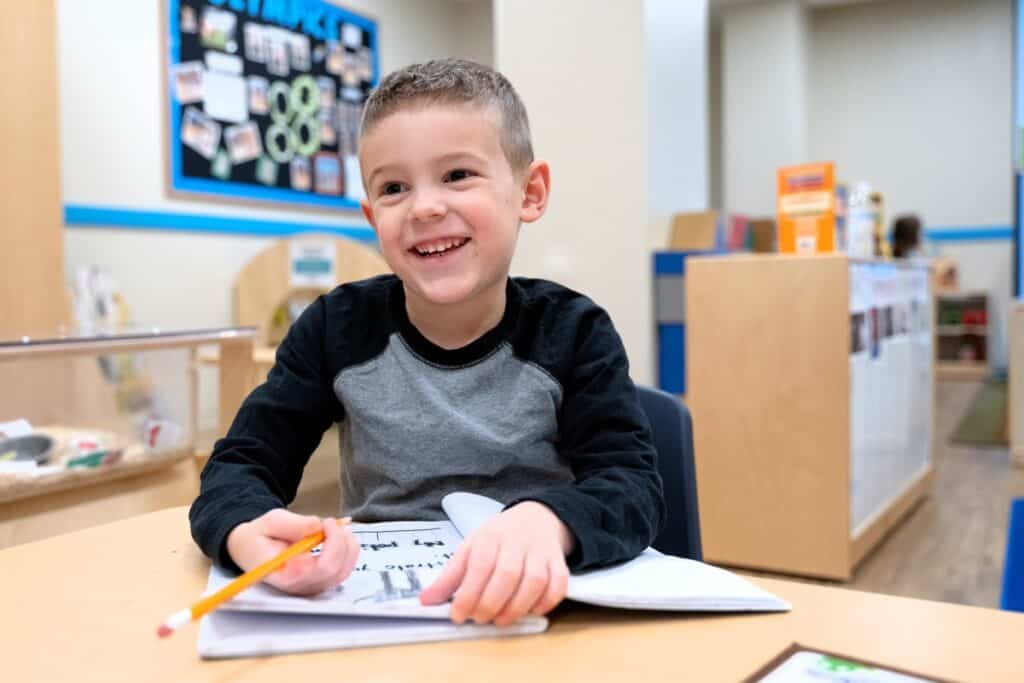
- Print-Rich Environment – Classrooms are thoughtfully designed so children see and use print every day. Labels on shelves, bins, and materials help children connect words to real objects and ideas. Familiar signs and logos for “cubbies” or the “art center” support word recognition and show children that print has meaning and purpose in everyday life.
- Writing Opportunities – You might see cookbooks and notepads for writing recipes in dramatic play, graphing activities in the math center, or paper and markers in the science center for drawing and recording observations.
- Books Everywhere – Each area, or center, of our classroom has books. If students are reading Mouse Paint, the book may be placed in the art center to inspire creativity as children experiment with color mixing. Nonfiction books about famous buildings from around the world might be found in our construction center. Books are rotated often to keep children curious and engaged.
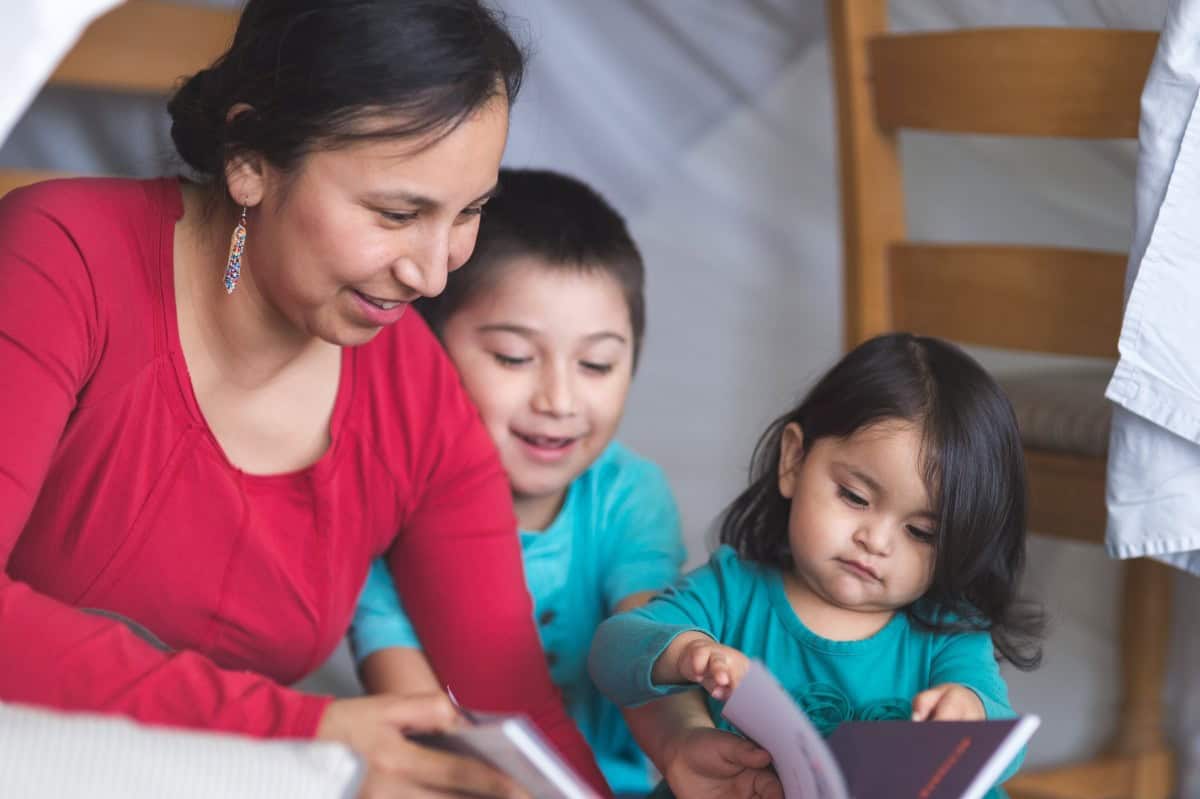
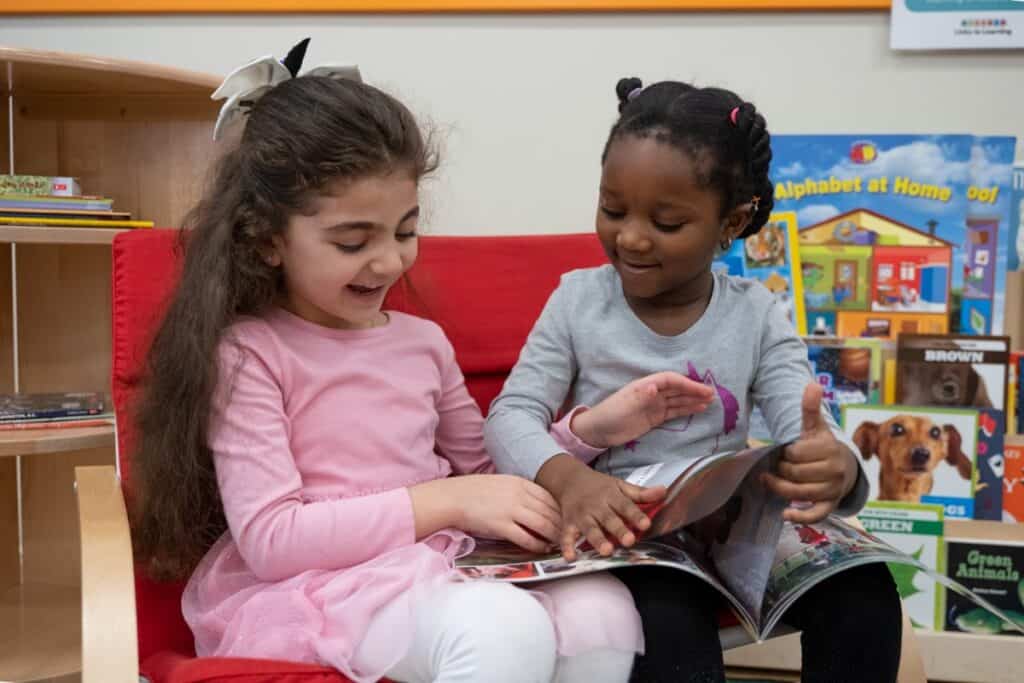
- Cozy Reading Areas – Every classroom has inviting spaces with books, puppets, and flannel board pieces. Infants explore board books, toddlers interact with picture books, and older children retell stories or create their own. Children are encouraged to read independently and with their peers.
Teacher Interactions
- Consistent Conversations & Daily Discussions – Simple, everyday conversations help strengthen brain development and language skills. In our younger classrooms, teachers narrate what children are doing, helping them connect actions to words. A teacher may say, “I see you pointing to the bananas. Snack time is coming soon,” or “You stacked those blocks so high!” Learning is extended by naming colors, counting objects, and encouraging children to repeat new words. As children grow, so do the conversations. Older students are guided with open-ended questions such as, “What do you think will happen next?” or “How could you fix that?” These discussions build vocabulary, support thinking skills, and help children express ideas with confidence.
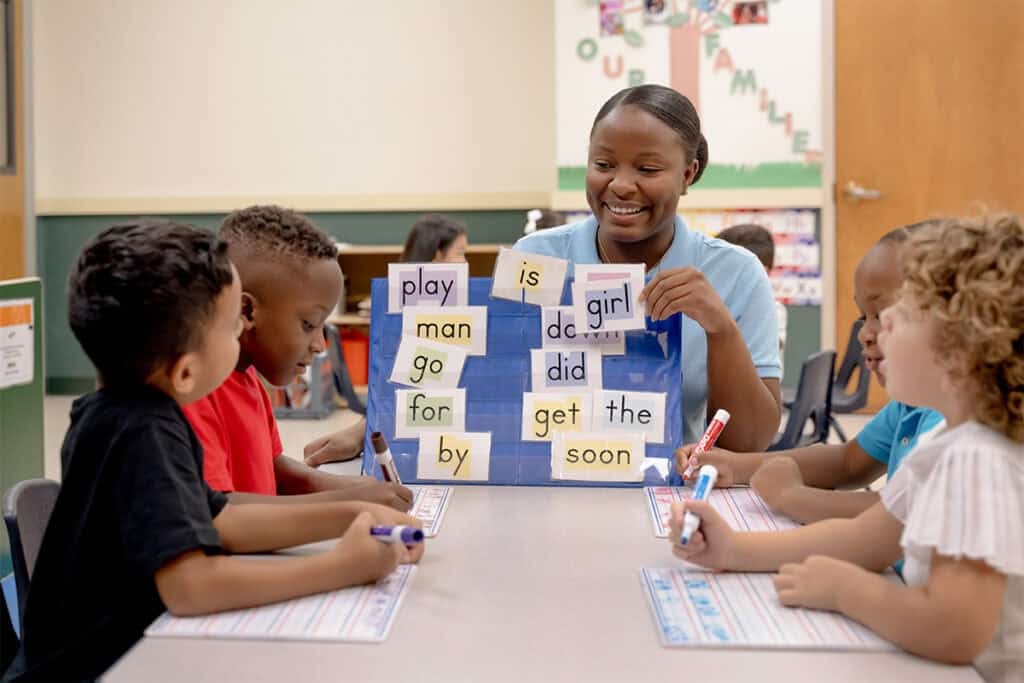
- Songs, Rhymes, & Chants – Teachers use music and rhythm to help children hear letter sounds, syllables, and patterns in language. They lead songs, repeat rhymes, and model actions like clapping syllables or tapping beats. As children grow, teachers introduce sound games and encourage children to create their own rhymes. These playful experiences help build phonological awareness.
Mastering Literacy Skills

- Name Recognition – Learning to recognize and write their own name is a big milestone for young children. Toddlers point to their pictures and say their names, two-year-olds practice name identification during circle time and small group play, and Pre-K students practice writing their names independently in journals or on class projects.
- Phonics & Letter Awareness – Phonics instruction is woven naturally, and intentionally, into the day. Teachers introduce and review letter names while giving children many opportunities to hear and practice specific letter sounds in meaningful contexts. For example, before reading Bear Snores On, a teacher might ask, “What letter makes the /b/ sound? Can we think of other words that begin with /b/?” In small-group and guided learning experiences, children strengthen their skills through enriching activities like fishing for letters in the sensory bin, matching magnetic letters to magnet boards, and playing interactive alphabet games such as sorting pictures by beginning sound. Instruction is adjusted to each child’s developmental level to support steady growth.

- Pre-Writing Skills & Early Writing Skills – Writing development unfolds step by step as children build hand strength and confidence. Toddlers begin with whole-arm scribbles, two-year-olds form lines and shapes, and Pre-K students practice proper letter formation. Students use a variety of writing tools or even just their fingers to write in colored rice, sand, and more, making writing fun!
- Sequencing – Sequencing helps children understand the order of events in stories and life. Two-year-olds retell familiar tales using picture cards, three-year-olds sequence events from books like If You Give a Mouse a Cookie, and Pre-K students describe multi-step processes during cooking activities or science experiments.
- Journaling – Children record their thoughts, experiences, and artwork in journals or class-created books. Two- and three-year-olds may label drawings or dictate stories about their family, while Pre-K students write journal entries about vacations or celebrations.
- Teacher-made books – Teachers create classroom books using children’s artwork, photos, or classroom events. Seeing their own work turned into books helps children feel proud and encourages them to read, share, and revisit their stories.
At every stage, our goal is the same: to help children build strong literacy skills and develop a love of reading that lasts a lifetime. The topics shared here are just a glimpse of the many ways our preschool brings this goal to life each day. By surrounding children with rich language experiences and guiding them with expert teaching, we make early literacy a journey that is fun, meaningful, and full of possibilities.
To learn more, find a school today!
Looking for more tips and resources now? Click the links below.
Creative Activities to Build Your Child’s Vocabulary